
Benefits of Regular House Cleaning: 7 Proven Wins

Table of Contents
Why Regular House Cleaning Pays Off More Than You Think
Health Benefits: How House Cleaning Reduces Dust, Allergens and Germs
Fewer allergens and better air quality
Hygiene where it matters most
The Mental Health Benefits of a Clean Home
Why mess affects the mind
What the evidence does and does not show
Practical ways to get the mental health benefit
How Often Should You Clean Your House?
A realistic baseline by household type
The task-frequency starting point
When the schedule is not working
Building a Regular Cleaning Schedule for a Home
Your Room-by-Room House Cleaning Checklist
Cleaning Methods, Product Safety and Lower-Waste Habits
Conclusion
Frequently Asked Questions
Last Updated: October 18, 2026
Why Regular House Cleaning Pays Off More Than You Think
The benefits of regular house cleaning reach far beyond a tidy lounge room. A consistent routine changes how a home feels, functions and supports the people living in it. A clean home is not a luxury; it is a foundation for better health, clearer thinking and a calmer household.
Most people treat cleaning as a chore to squeeze in when things look messy. That approach misses the point. Regular cleaning is preventive care for your home and your body. It removes dust before it settles into soft furnishings, stops grease building up on kitchen surfaces, and limits the places germs can thrive.
Below, we break down seven proven wins, from respiratory health to better sleep, and give you a realistic schedule you can actually keep.
Key Takeaway The biggest shift is mental: stop seeing house cleaning as a reaction to mess and start treating it as routine maintenance, like changing the oil in a car.
Health Benefits: How House Cleaning Reduces Dust, Allergens and Germs
Regular house cleaning reduces dust, allergens and germs by removing the particles and residues that trigger reactions and support microbial growth. The practical health payoff is cleaner air, fewer symptom flare-ups and safer surfaces.
Fewer allergens and better air quality
Dust mites, pollen tracked in from outside, and pet dander settle on floors, bedding and soft furnishings. When those particles build up, air quality drops and allergy symptoms often worsen. A Asthma Australia's guidance on managing triggers at home highlights how reducing dust and dander supports respiratory health for people with asthma and allergies.
Wiping surfaces, vacuuming with a quality filter, and washing bedding regularly remove the source rather than just moving it around.
Hygiene where it matters most
Kitchen countertops, chopping boards and bathroom surfaces collect food residue and moisture, the conditions bacteria need to multiply. Cleaning these high-touch areas regularly limits germs before they spread to food or hands.
For households with children, older adults, pets or anyone with a compromised immune system, this hygiene layer matters more, not less. A clean home environment is one of the simplest forms of preventive care available.
The Mental Health Benefits of a Clean Home
A clean, ordered home supports mental wellbeing by reducing visual distraction, lowering the effort of everyday decisions, and restoring a sense of control, but the strength of these effects varies between people and should not be oversold. The practical mental health benefits of a clean home show up in mood, focus and the ability to switch off at the end of the day.
Clean My Space
Why mess affects the mind
Clutter and mess create visual noise that the brain keeps processing, which adds to stress. A tidy room removes small decisions, like where to put things or what needs doing next. That frees up attention for work, family and rest. A clean bedroom also supports better sleep, since a calm, uncluttered environment helps the mind settle.
The sense of order and control that comes from a consistent routine is often underestimated. When your home is under control, everything else feels a little more manageable.
What the evidence does and does not show
Most practitioners find that the mental health payoff is real but modest, and it depends on how you frame the task. Cleaning done under pressure, to meet someone else's standard, or as a reaction to shame about mess, can increase stress rather than reduce it. The benefit comes from routine maintenance you control, not from perfection.
A common pattern is that people feel better after a short, focused reset (10-15 minutes on one visible area) than after an exhausting whole-house blitz. The goal is a home that works, not a showroom.
Key Takeaway Treat cleaning as a small, repeatable act of care for your future self, not a test of how tidy you are. Consistency beats intensity for mood as well as for mess.
Practical ways to get the mental health benefit
Start with one visible surface. Clearing a kitchen bench or bedside table gives an immediate sense of order without a big time commitment.
Pair cleaning with something you enjoy. A podcast or playlist makes the task feel less like a chore and more like part of your routine.
Set a timer, not a standard. A 15-minute reset is enough to shift how a room feels; you do not need to finish everything.
Involve the household. Shared, simple tasks reduce the mental load on one person and build a routine everyone can keep.
Protect sleep spaces. A calm, uncluttered bedroom is one of the easiest wins for better rest.
If mess is affecting your mood or daily functioning, cleaning routines can help but are not a substitute for professional support. Speak to your GP or a mental health professional if stress or low mood persists.
How Often Should You Clean Your House?
Most homes need light daily tidying, weekly surface cleaning, and deeper tasks monthly or seasonally, but the right frequency depends on household size, pets, allergies, foot traffic and your own capacity. The honest answer is that a schedule you can actually keep beats an idealised checklist you abandon.
A regular cleaning schedule for a home should match your reality, not a magazine spread. Households with pets or allergy sufferers generally need more frequent vacuuming and dusting. Busy working parents often find a mix of quick daily resets and one longer weekly session works best. People with mobility limitations, chronic illness or caring responsibilities need a different starting point again.
A realistic baseline by household type
Household situation | Priority adjustments |
Pets | Vacuum high-traffic floors 2-3 times a week; wash pet bedding regularly; keep entryways clear of tracked-in dirt |
Allergy or asthma in the household | Focus on dust and dander removal; use a vacuum with a quality filter; wash bedding weekly; reduce soft clutter |
Children | Prioritise kitchen and bathroom hygiene; keep cleaning products stored out of reach; involve kids in simple daily resets |
Older adults or mobility-limited residents | Break tasks into short seated or standing sessions; use lightweight tools; prioritise fall-risk areas like floors and bathrooms |
Busy or shift-working households | Use 10-15 minute daily resets; book one longer session weekly or fortnightly; consider professional help for deep tasks |
The task-frequency starting point
The table below gives a practical starting point you can adjust.
Task | How often | Why it matters |
Wipe kitchen benches and sink | Daily | Stops grease and food residue building up |
Vacuum high-traffic floors | 2-3 times a week | Removes dust, dirt and pet dander |
Clean bathrooms | Weekly | Limits germs and moisture build-up |
Wash bedding | Weekly to fortnightly | Reduces dust mites and allergens |
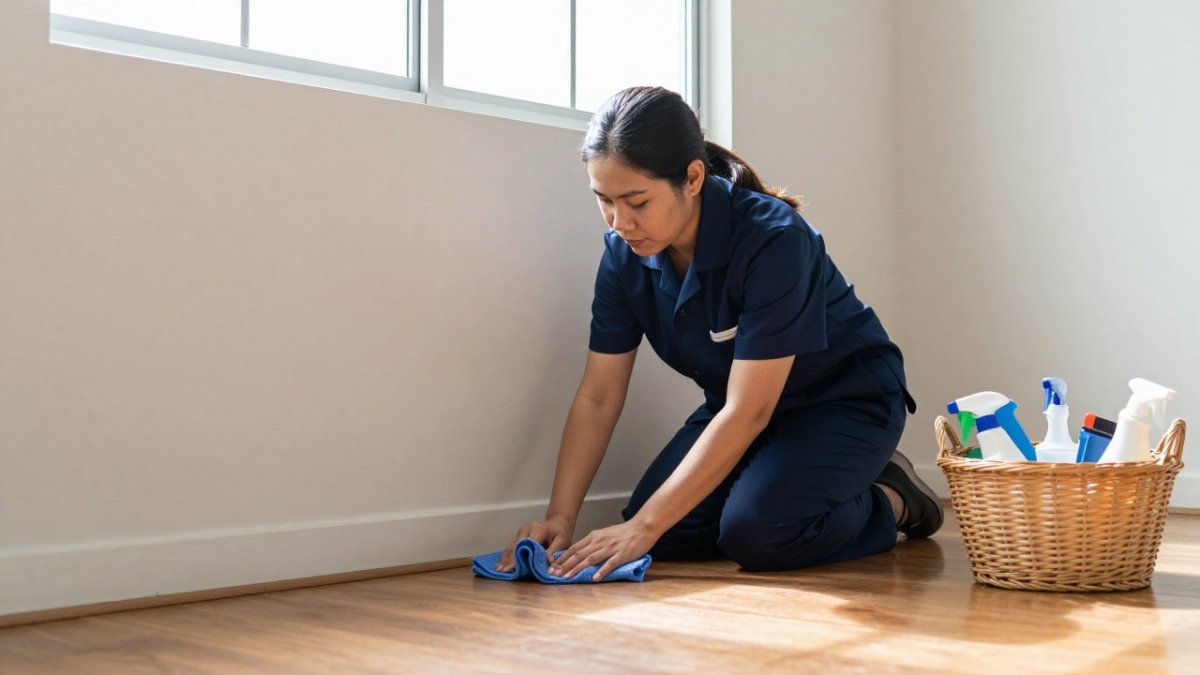
Deep clean appliances and skirting | Monthly to seasonal | Prevents dirt buildup in forgotten spots |
When the schedule is not working
If you consistently miss tasks, the schedule is the problem, not you. Reduce the frequency, shrink the task, or delegate. A 10-minute daily reset and a fortnightly deeper clean is a legitimate routine, not a failure. For households where time, health or mobility makes regular cleaning hard, professional help for the heavier tasks can keep the baseline manageable.
Pro Tip Pick the two or three tasks that matter most for your household, usually kitchen hygiene, bathroom hygiene and floor dust, and protect those first. Everything else can flex.
Building a Regular Cleaning Schedule for a Home
A schedule only works if it fits your week. Rather than blocking out a whole day, break house cleaning into short, repeatable sessions. This is how busy households keep a clean home without burning out.
Try this approach:
Set a 15-minute daily reset. Tidy surfaces, deal with dishes and reset the kitchen.
Pick one weekly focus per room. Alternate bathrooms, floors and dusting so nothing is skipped.
Book a monthly deep clean. Target appliances, skirting boards and inside cupboards.
Assign tasks by household. Even children can handle simple jobs like clearing their own spaces.
Pro Tip The thing nobody tells you about cleaning schedules is that consistency beats intensity. Three short sessions a week outperform one exhausting weekend blitz, because mess never gets a chance to build.
Flexible scheduling is one of the reasons families bring in professional cleaners for the heavier tasks. IMAD Cleaning offers tailored cleaning solutions for residential spaces, with flexible scheduling to suit your week, so the deep work happens without eating into your weekends.
Your Room-by-Room House Cleaning Checklist
A house cleaning checklist removes guesswork and stops you missing the spots that matter. Work top to bottom in each room so dust falls onto floors you clean last.

Kitchen: Wipe countertops, clean the sink, degrease the stovetop, clear food residue from benches.
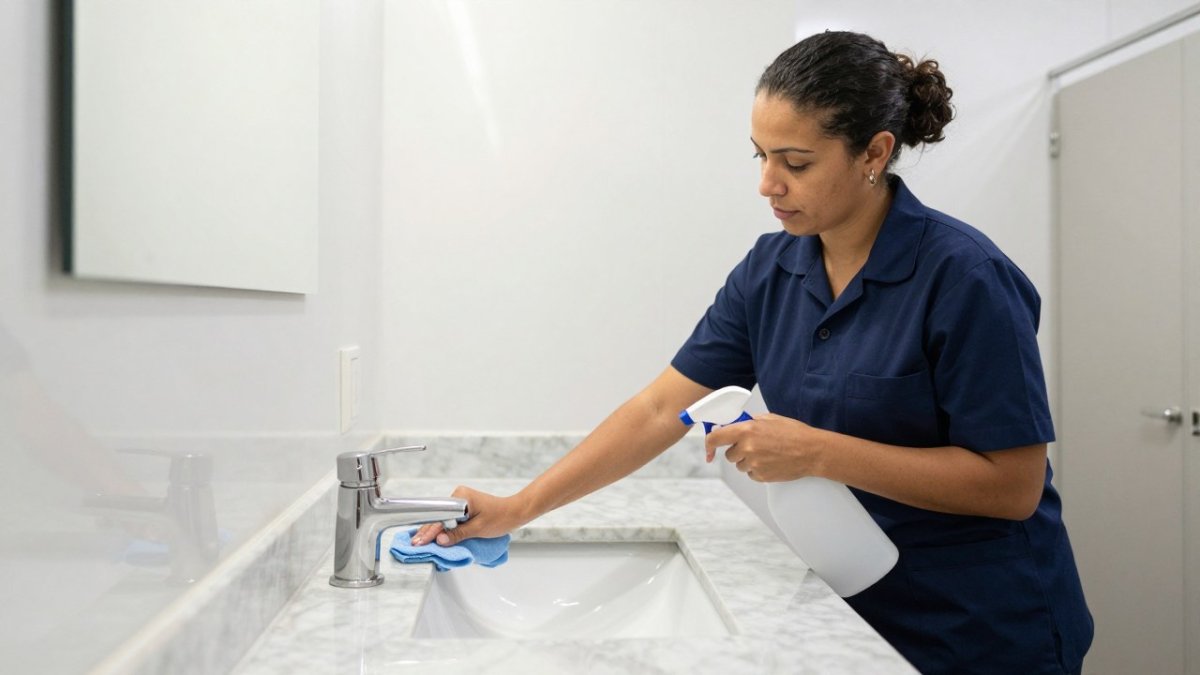
Bathroom: Scrub basins, toilets and showers, then wipe mirrors and mop floors.
Bedrooms: Change bedding, dust surfaces, vacuum under the bed.
Living areas: Dust shelves, vacuum soft furnishings, tidy clutter.
Entryways: Sweep floors and wipe high-touch handles and switches.
This checklist works for a quick weekly clean or a full deep clean, depending on how much time you have.
Cleaning Methods, Product Safety and Lower-Waste Habits
The method matters as much as the effort. Good cleaning practices protect your family and reduce waste at the same time. Always read product labels and follow the Australian Competition and Consumer Commission's guidance on product safety before mixing or storing cleaners.
For method, match the product to the surface: microfibre cloths for dusting, pH-appropriate cleaners for benchtops, and separate cloths for bathrooms and kitchens to stop cross-contamination. Keep ventilation going while you clean.
Lower-waste habits are simple to adopt:
Refill spray bottles instead of buying new ones.
Use washable microfibre cloths over disposable wipes.
Choose concentrated products to cut packaging.
For households with kids and pets, store chemicals out of reach and rinse surfaces that food touches. If you are unsure which products suit your home, our team can advise on safe, effective methods.
Conclusion
Keeping a clean home is a challenge when work, family and pets compete for your time. A consistent routine delivers real wins for health, mood and peace of mind, but the heavy lifting is easier with support. IMAD Cleaning offers tailored cleaning solutions for residential and commercial spaces, flexible scheduling to suit your week, and an expert team using the best techniques and tools. Get started with IMAD Cleaning and enjoy a spotless, healthier home without the hassle.
Frequently Asked Questions
What are the benefits of regular house cleaning?
Regular house cleaning reduces dust, allergens and germs on high-touch surfaces, which supports respiratory health and everyday hygiene. It also makes a home easier to maintain because dirt and grease never get the chance to build up. Many people report feeling calmer and more in control in a tidy space, and a consistent routine spreads the workload so weekends aren't swallowed by one big clean. For busy households, a professional service can keep the routine on track when life gets in the way.
How often should you clean your house?
Most homes need a light tidy daily, a general clean weekly and a deeper clean every one to three months. Kitchens and bathrooms collect grease, food residue and bacteria fastest, so benchtops, sinks and toilets benefit from a wipe-down every few days. Bedrooms and living areas can usually wait a week. Households with pets, children or allergy sufferers should clean floors and vacuum more often, while a single occupant may stretch some tasks out. Adjust the frequency to how quickly your home actually gets dirty.
Can regular cleaning help reduce dust and allergens at home?
Yes. Dust, pet dander and pollen settle on floors, soft furnishings and surfaces, and they get stirred back into the air when disturbed. Vacuuming with a machine that has a proper filter, damp-wiping surfaces rather than dry dusting, and washing bedding regularly all remove these particles instead of pushing them around. If anyone in the home has asthma or allergies, prioritise bedrooms and living areas and clean before the air feels stale. A consistent routine matters more than an occasional intense session.
Is it better to clean a little every day or do one big clean?
A little every day wins for most households. Short daily habits, such as wiping kitchen countertops, making beds and putting things away, stop dirt and clutter from accumulating, which keeps the bigger jobs manageable. One big clean still has a place, particularly before guests arrive or when moving out of a rental, but relying on it alone usually means grease, dust and grime build up in between. A practical middle ground is a short daily reset plus a weekly schedule for floors, bathrooms and laundry.
CONTACT US TODAY
Comments