
Why Professional Cleaners Are Worth the Cost

Last Updated: November 10, 2026
Quick Summary
Professional cleaners are worth the cost because you trade your hours for their money: a Saturday spent scrubbing is a Saturday you don't get back, and most DIY efforts still miss the spots that matter. A professional clean brings proper tools, trained technique, consistency and coverage of skirting boards, vents, grout and ceiling fans.
DIY wins on full control, no scheduling, lower upfront spend and familiarity with your home.
House cleaning cost depends on home size, condition, frequency and the scope of work you choose.
A simple break-even test compares your cleaning hours times your hourly value against the quote.
Busy households with pets or young children usually need weekly or fortnightly regular cleaning.
Vet a service by checking for an ABN, insurance, trained staff and two recent local references.
Is a professional cleaner worth it for your home?
IMAD Cleaning offers tailored residential and office cleaning with flexible scheduling and affordable rates.
Table of Contents
Professional Cleaning vs DIY: The Real Comparison
Why professional cleaners are worth the cost comes down to one trade: your hours against your money. A Saturday spent scrubbing is a Saturday you don't get back, and most DIY efforts still miss the spots that matter.
The comparison is not really about effort. It is about what gets cleaned, how well, and what your time is actually worth.
Where DIY Wins
DIY cleaning has real advantages, and pretending otherwise helps nobody.
Full control. You decide the products, the timing and the standard.
No scheduling. Clean at 7am or 11pm, whenever it suits.
Lower upfront spend. You buy a mop and some spray, and that's it.
Familiarity. You know your home's quirks better than anyone.
For a small flat with light traffic, DIY is often perfectly adequate.
Where a Professional Cleaner Wins
A professional cleaner can bring speed, consistency and equipment most households don't own. That can mean:
Proper tools. Commercial vacuums and extractors reach what a domestic unit can't.
Trained technique. Staff know the order of work, so nothing gets missed.
Consistency. The same standard every visit, not just when you have guests.
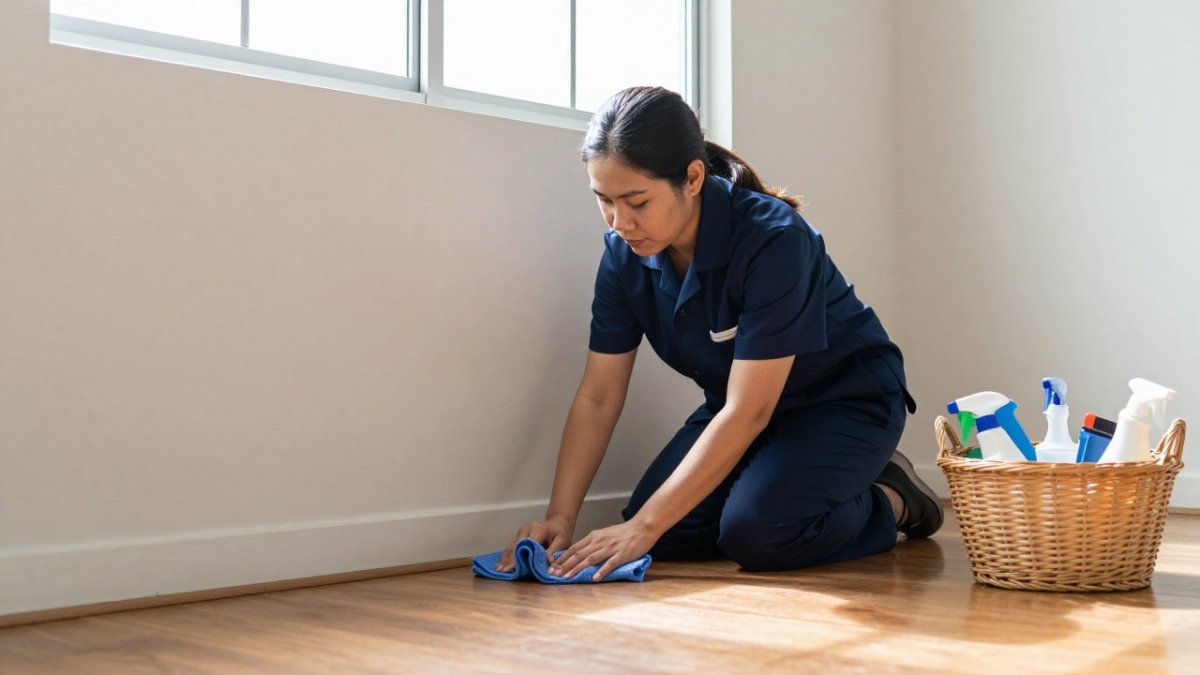
Coverage. Skirting boards, vents, grout and ceiling fans get done, not skipped.
Watch out: the biggest DIY mistake is cleaning what's visible and ignoring what builds up. Grime behind appliances and dust in hard-to-reach areas compounds quietly.
What Does a House Cleaner Do That You Might Miss
A house cleaner does far more than vacuum and wipe benches. The scope of work usually covers the tasks that fall off a DIY list first.
Typical cleaning tasks include:
Dusting high shelves, fans and light fittings
Wiping skirting boards and door frames
Cleaning inside the microwave and appliance fronts
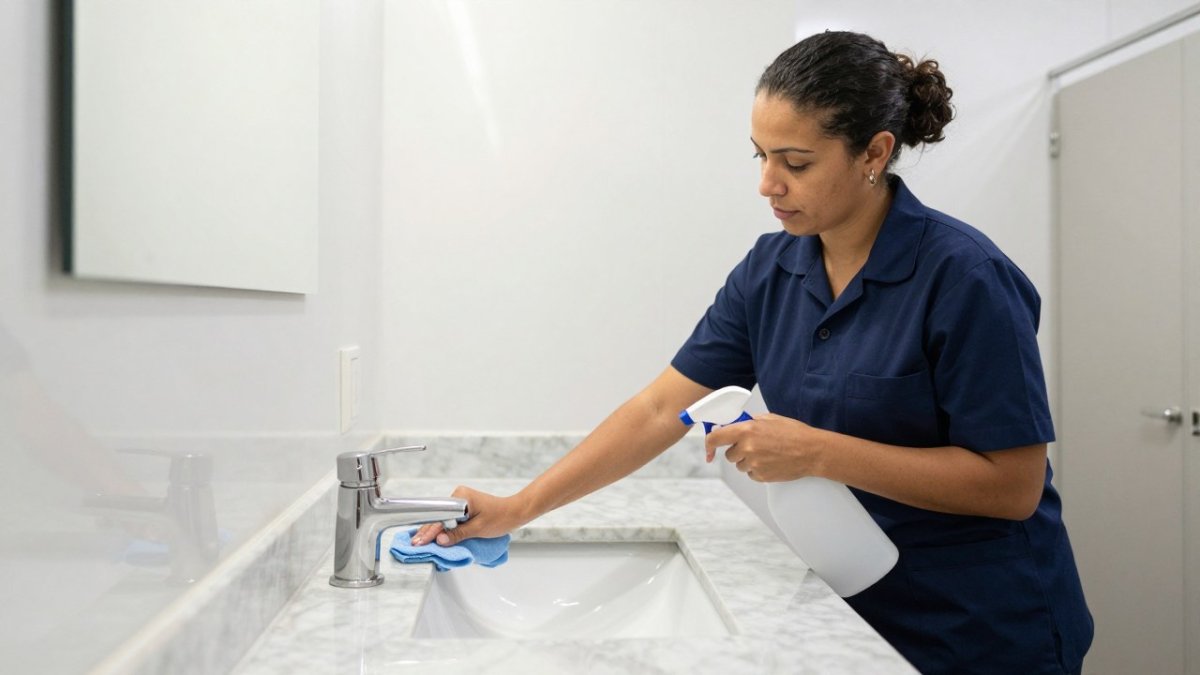
Descaling showers, taps and grout
Vacuuming under furniture edges and along tracks
Wiping switches, handles and other touch points
Hard-to-reach areas such as behind the toilet, under the fridge and inside window tracks are often where dust and grime build up unnoticed. If you want the full breakdown of what a deep clean covers, see what is included in professional deep cleaning.
Breaking Down House Cleaning Cost and Value for Money
House cleaning cost depends on home size, condition, frequency and the scope of work you choose. A one-off deep clean costs more than regular maintenance because it takes longer and covers more. Ask for a tailored quote rather than guessing from a generic rate.
To judge whether a quote is fair, it helps to know what drives the number up or down:
Home size and layout. More rooms, multiple bathrooms and stairs add labour hours.
Condition. A neglected home or a post-renovation clean takes longer than a maintained one.
Frequency. Regular visits usually attract a lower per-visit rate than one-off deep cleans because the cleaner is maintaining, not restoring.
Scope. Ovens, fridges, windows, balconies and carpet steam cleaning are often add-ons priced separately.
Access and logistics. Parking, stairs and keys or access arrangements can affect the quote.
Ask each provider for a written quote that itemises the tasks included, the estimated hours and any add-on charges. That makes quotes comparable.
Sample Budgets to Sanity-Check a Quote
Use these worked examples as a template, then substitute your own local quote. The figures are illustrative only, always confirm against written quotes.
Small flat, one bedroom, light traffic, fortnightly maintenance. Estimate 2-3 hours per visit. At an illustrative $50-$70 per hour, that is roughly $100-$210 per visit, or about $200-$420 per month on a fortnightly cycle.
Three-bedroom home, two bathrooms, one pet, weekly maintenance. Estimate 3-4 hours per visit. At the same illustrative hourly range, that is roughly $150-$280 per visit, or about $600-$1,120 per month.
Same three-bedroom home, one-off deep clean. Expect a longer task list and a package price rather than an hourly rate; budget for more than a single maintenance visit because appliances, grout, tracks and skirting boards are included.
End-of-lease clean. Usually the most expensive one-off because it is inspected against a condition report; ask for a written scope and a bond-back guarantee before booking.
Watch out: a quote that is dramatically cheaper than the others usually means fewer hours, fewer tasks or no insurance, compare the scope line by line, not just the total.
A Simple Break-Even Method for Your Household Budget
Use this quick test to decide if outsourcing chores makes sense for you:
Estimate your cleaning hours. Time a full clean honestly, vacuuming, bathrooms, kitchen, dusting and floors. Say 3 hours.
Put a value on your time. Use your take-home hourly pay, or what you would pay for childcare or a trade. Say $45 per hour.
Multiply hours by your hourly value. 3 hours × $45 = $135 of opportunity cost per clean.
Add the supplies and equipment you would otherwise buy. Mop, cloths, chemicals, vacuum bags and replacement cycles all carry a cost; a commercial vacuum or steam mop is a significant outlay.
Compare the total to the quote. If the quote is at or below your opportunity cost plus supplies, outsourcing is financially neutral or better, and you get the hours back.
Adjust for quality and health. A professional clean that reaches grout, tracks and behind appliances may reduce allergen build-up, which has value that is hard to price but real.
If your time value is close to or above the quote, outsourcing wins. If it is well below and you enjoy the work, DIY is fine. For a fuller picture of local rates and checklists, review house cleaning services and their costs.

How Often to Hire a House Cleaner for Your Home
How often to hire a house cleaner depends on your household, not a fixed rule. Busy households with pets or young children usually need weekly or fortnightly regular cleaning.
A common approach:
Weekly: busy families, pets, allergies
Fortnightly: most working households
Monthly: low-traffic homes, singles, couples
One-off: move-in, move-out, or pre-event deep cleaning
Cleaning frequency is really a budget and lifestyle call. Start with fortnightly and adjust based on how the home holds up between visits.
Cleaning frequency is a budget and lifestyle call, and the article maps common households to a typical schedule.
Frequency | Best for |
Weekly | Busy families, pets, allergies |
Fortnightly | Most working households |
Monthly | Low-traffic homes, singles, couples |
One-off | Move-in, move-out, or pre-event deep cleaning |
The Health, Stress and Time Savings That Add Up
Time savings are the headline, but the health benefits are the quieter win. Regular cleaning reduces dust, allergens, mites and mould, which supports better indoor air quality. For asthma or allergy sufferers, that difference is felt, not just seen.
Reduced stress matters too. The mental load of a never-ending to-do list wears people down. Handing it off returns headspace, not just hours.
Who benefits most from hiring a cleaner?
Busy households juggling work and kids
Families with young children and pets
People with allergies or respiratory sensitivity
Older residents who find heavy cleaning hard
Property managers needing reliable turnover cleans
If you want the longer case for ongoing visits, read about the benefits of regular house cleaning.
How to Vet, Hire and Prepare for a Cleaning Service
Trust is the make-or-break factor. Vet a cleaning service before you book, not after. The practical version is a short process you can run in one afternoon.
Step 1: Screen Before You Quote
Check the business is real. Look for an Australian Business Number (ABN) and a physical business address, not just a mobile number.
Ask about insurance. Public liability cover protects you if something is damaged; ask for the certificate or a written confirmation.
Ask about staff. Are cleaners employed or subcontracted? Are they trained, police-checked and covered by workers compensation?
Ask for references. Two recent local references are enough to confirm reliability and standard of work.
Watch out: a provider who will not confirm insurance or an ABN in writing is a risk you do not need to take.
Step 2: Confirm Scope and Exclusions in Writing
Scope is where quotes become incomparable. Ask for a written task list that separates standard, deep, move-in/move-out and add-on work.
Standard maintenance clean: vacuuming, mopping, bathrooms, kitchen surfaces, dusting reachable surfaces, bins.
Deep clean: the above plus skirting boards, door frames, vents, light fittings, inside the microwave, grout and tracks.
Move-in/move-out: often includes inside cupboards, appliances and windows, and is checked against a condition report.
Common exclusions or add-ons: inside ovens, inside fridges, windows, balconies, carpet steam cleaning, garage and external areas.
Confirm access arrangements (keys, lockbox, alarm codes), whether the provider supplies equipment and chemicals, and the cancellation notice period. Put it all in the booking confirmation.
Step 3: Prepare the Home and Set Expectations
Clear clutter from floors and benches so cleaning time goes to cleaning, not tidying.
Secure pets and note any rooms or items to avoid.
Flag priority areas, for example, allergy-sensitive bedrooms or a bathroom with mould.
Leave a note of any products you prefer or sensitivities in the household.
Step 4: Measure Results and Resolve Problems Fairly
Use a simple quality checklist on the first visit: floors, bathrooms, kitchen, dusting, bins, and the agreed extras. If something is missed, raise it within 24-48 hours with photos and a specific description.
Ask these questions before booking:
Are staff trained, and is there insurance cover?
What is included, and what costs extra?
Is there a satisfaction guarantee if something is missed?
Will the same cleaner come each visit?
How much notice do you give for cancellations?
A reliable service confirms scope in writing and has a clear process for fixing problems. For warning signs to screen for, check signs of unreliable cleaning services.
Book a Walkthrough and Get a Tailored Quote
Getting a real answer on cost and value starts with a walkthrough.
IMAD Cleaning offers tailored cleaning solutions for residential, office and commercial spaces, with flexible scheduling and affordable rates.
Get started with IMAD Cleaning and turn your weekends back into your own time.
Contact us to arrange a walkthrough and get a tailored quote.
Stop guessing whether a cleaner is worth it and see the numbers for your own home.
Frequently Asked Questions
Is hiring a professional cleaner worth the cost?
For most busy households, yes. A professional cleaner returns hours each week, reaches areas DIY routines skip, and reduces the mental load of planning chores. Whether it pays off depends on your hourly value, household size and cleaning frequency. Weigh the service fee against the time you would otherwise spend, plus the cost of products and equipment, to judge value for money in your own budget.
How much does a house cleaner cost in Australia?
House cleaning cost varies with home size, cleaning frequency, and whether you book a one-off deep clean or regular maintenance. Rather than quote a flat figure, ask for an itemised quote that lists the scope of work, inclusions and any exclusions. That makes it easier to compare providers fairly and avoid surprise fees. Contact IMAD Cleaning for a tailored quote based on your property.
How often should you hire a house cleaner?
Most households book fortnightly or weekly regular cleaning, with a deep cleaning session once or twice a year. Families with young children, pets or allergy sufferers often benefit from weekly visits. A one-off clean suits move-in, move-out or occasional upkeep. Start with fortnightly and adjust based on how quickly dust and allergens build up in your home.
Can professional cleaners do a better job than DIY cleaning?
Professional cleaning typically uses dedicated equipment and techniques to reach hard-to-reach areas and clean to a consistent standard each visit. DIY cleaning can match the result on a good day, but consistency is where professional cleaning vs DIY diverges.

Comments